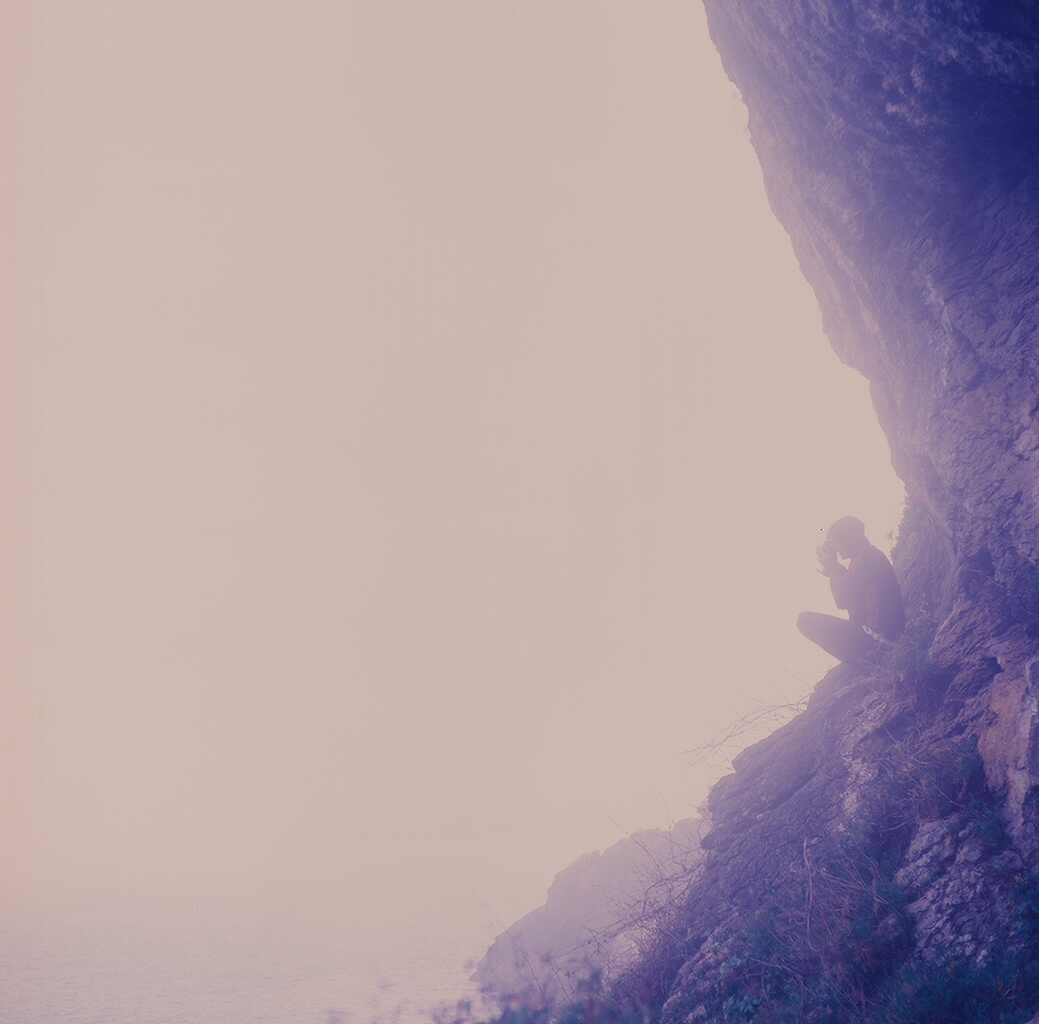
Niles Atallah is a Chilean–United States artist, filmmaker and educator of the Palestinian diaspora, based in Santiago, Chile. His practice encompasses cinema, animation, photography, installation, sound and performance with a sustained interest in material processes, archives and the unstable boundary between documentary evidence, fiction and imagination. He works across writing, directing, producing, cinematography, editing, art direction, sound design, image post-production and color, combining artisanal techniques—puppetry, mask-making, rotoscopy, wet-plate collodion photography and the physical manipulation of celluloid—with digital, 3D, virtual reality (VR), extended reality (XR) and emerging technologies.
Atallah’s feature films include Lucía (2010), Rey (2017) and Animalia Paradoxa (2024). Lucía premiered at the San Sebastián International Film Festival and later received the FIPRESCI Prize, the French Critics’ Discovery Prize and a Special Jury award at Cinélatino in Toulouse; Atallah also received Best Director at the Valdivia International Film Festival. Rey premiered in Rotterdam’s Tiger Competition, where it received the Special Jury Award “for exceptional artistic achievement,” and later won the French Critics’ Discovery Prize at Cinélatino Toulouse. Merrimundi (2025) had its world premiere in the Orizzonti section at the Venice International Film Festival.
His moving image work is inseparable from his visual art practice. In 2007, he founded Diluvio with Joaquín Cociña and Cristóbal León, a Chilean production company for experimental animation, feature films, music videos, installation and post-production. Together they created the animated shorts Lucía and Luis through room-sized installations and material animation. Their work has appeared at a variety of exhibition spaces around the world including the Guggenheim Museum in New York, Mercosul Biennial, Whitechapel Gallery, Kunsthaus Zürich and Fundación PROA among others. On León and Cociña’s La casa lobo / The Wolf House (2018), winner of the Caligari Film Prize at the Berlinale, he collaborated as one of the producers and on the image post-production. He also collaborated on their Los huesos / The Bones (2021), winner of Best Short Film at the Venice Film Festival. He founded the film production company Fósfora, whose first production was Merrimundi (2025), and Casa Fósfora, a collective space that opened at the beginning of 2026 in the Bellavista neighborhood of Santiago, with a film laboratory, post-production facilities, studios, workshops and an exhibition space.
Atallah’s collaborative work extends beyond production companies. He was a cofounding member of the Ojo Chile film collective during the 2019 social uprising; within the collective, he proposed, founded and directed its animation workshop, developing collective handmade animation as a creative response to images of state violence, and is also a member of Cineastas x Palestina. These collectives reflect his broader approach to cinema as a shared artistic and social process rather than a fixed industrial model.
Teaching and mentorship form a substantial part of his practice. He teaches cinema, experimental animation, cinematography and audiovisual creation at universities and institutions in Chile, including Universidad Diego Portales, Pontificia Universidad Católica de Chile and Universidad de Chile. He has also been a guest lecturer at Harvard University in the United States. His work spans undergraduate and master’s-level education, thesis supervision and curriculum design. He has also led independent workshops and laboratories in Chile and abroad on experimental filmmaking, rotoscopy, 16mm and 35mm material intervention, collective creation and project development at institutions and festivals including the Cineteca Nacional de Chile, Corrientes de No Ficción in Arequipa, Perú, and the Escuela de Bellas Artes in Cali, Colombia.
He is frequently invited as a speaker, panelist, mentor and project evaluator, addressing archives and the ecology of images, dystopia and apocalypses, fiction and truth, materiality, animation, artificial intelligence and experimental cinema. He has served on international festival juries and evaluated development projects for the Hubert Bals Fund. His work as a script consultant and project mentor includes feature-film development for Locarno Open Doors. His writings have appeared in books, magazines and commissioned festival publications, while his films and artistic practice have generated extensive criticism, interviews and academic scholarship internationally.
His projects have received support from the Global Film Initiative, Fondo de Fomento Audiovisual, FONDART, CORFO, CNC Aide aux cinémas du monde, Doha Film Institute, TorinoFilmLab, Hubert Bals Fund and NRW Film Fund. Development programmes and residencies include Cinéfondation L’Atelier at Cannes, Pavillon Les Cinémas du Monde at Cannes, Binger FilmLab’s Writer’s Lab, TorinoFilmLab Script & Pitch and Framework, Australab, Cinéma en Développement, Mediamorfosis / LAB XR, and IDFA DocLab Forum, among others.
Curriculum vitae
Expanded CV, 2026: films, exhibitions, teaching, research and a complete bibliography, with links to the source archive.